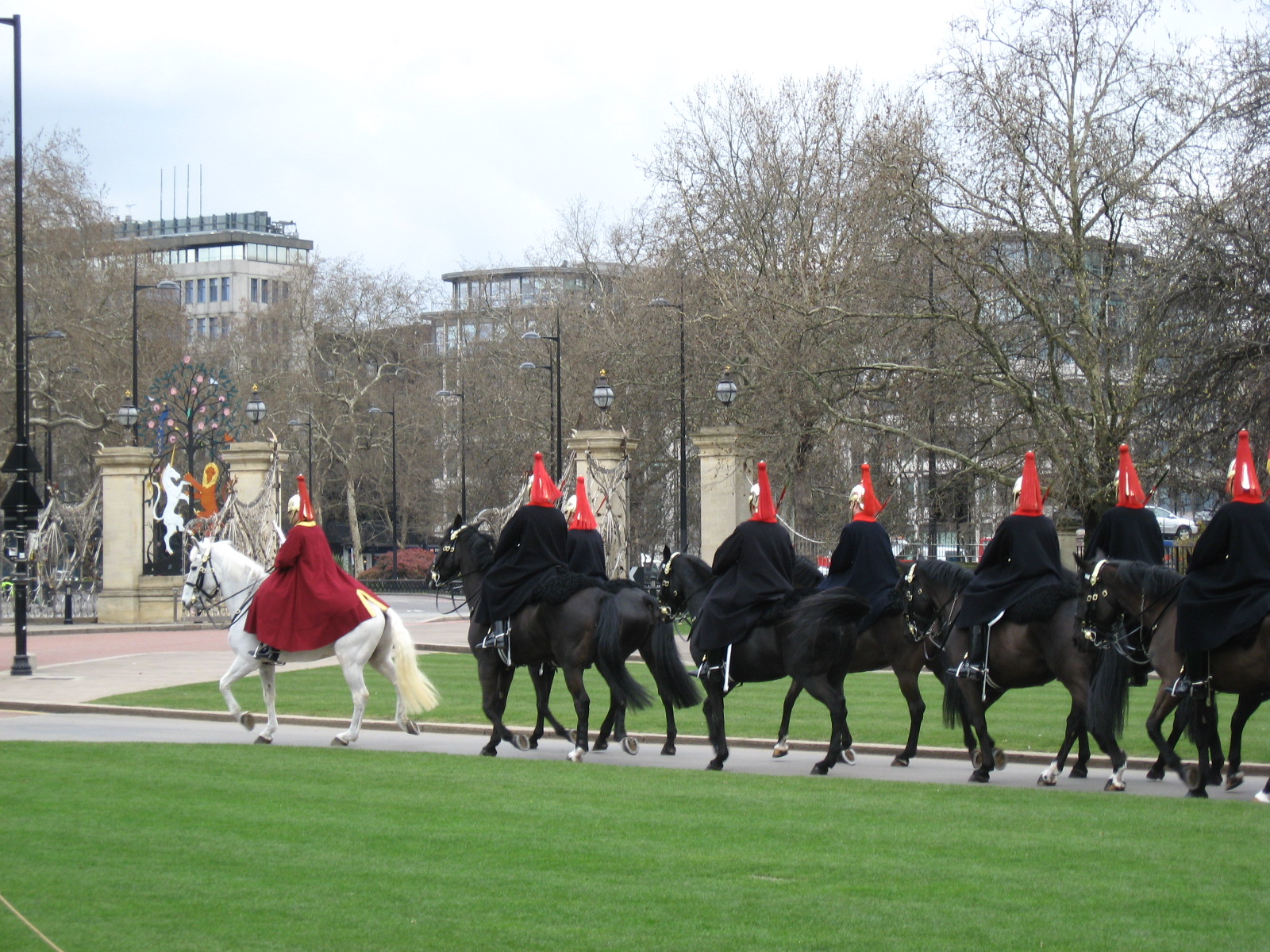
This third post in the household series examines the staffing of the stable in a high-ranking noble’s household—in this case, the stable of Duke Aidan, the main character of my fantasy trilogy. If Aidan successfully holds onto control of his duchy or establishes a main residence, he will need a fairly large number of officials and servants in the stable.
I’m reading a number of different sources regarding medieval households, and I’m discovering some important considerations.
First, since horses eat a lot each day, wealthy nobles rarely kept all their horses in one stable. They might keep forty to fifty horses in their stable, while the marshal of the stable would spread small herds of twenty, thirty, or more horses across the lord’s other manors to ease the problems of supply. Yet since visitors of all different kinds would be constantly coming and going, often claiming hospitality privileges, the stable’s total population of horses could climb above one hundred or more for extended periods. But the main point is that gathering a full muster to go on campaign or a long trip would require a certain amount of time.
Labarge lists the warhorse, the palfrey, the rouncey, the cart-horse, and the sumpter horse or mule as the necessary horses. The palfrey was the “everyday saddle horse of the upper classes,” while the rouncey was “used by the average fighting-man” (159). On campaigns, as Peter Reid tells us in A Brief History of Medieval Warfare, typical allowances were common for the fighting men. A knight could have four horses; a squire, three; a man-at-arms, two; and a mounted archer, one. I’m assuming that most would try to keep those horses during peacetime, but maybe not.
The chief officers of the stable are fairly standardized, but the number of grooms, assistants, and stable boy is variable. As usual, I’m seeing conflicting numbers in many sources. Some say one groom took care of one horse. Others say that a groom would take care of four horses, with the help of a groom’s assistant and at least one stable boy. The marshal could hire local boys to augment the household’s staff, if necessary.
So my current roster lists seventy-six permanent members for the stable establishment, with the expectation of hiring more stable hands whenever necessary. Here’s a rough table of organization for the stable:
Nigel, the marshal [reports to the treasurer]
Giles, the clerk of the marshalcy
Owen, sergeant of the Duke’s horses [including all the warhorses]
William, Owen’s assistant
Senior grooms (x3) [Rodney, Frank, John of Paradise] [These three grooms tend to Aidan’s horses and the chief military officers and household officers’ horses.]
Stable boys (x3) [Braden, Dylan, Orrin; assigned to the sergeant of the Duke’s horses]
Hugh, sergeant of palfreys
Palfreymen, or palfrey grooms (x4) [Simon of West Crossing, John of Oakford, Brennan, Shane]
Groom’s assistants, or stable boys, for palfreys (x4) [Harry, Jackson, Oliver, and Tommy]
Eames, sergeant of the household horses (rounceys)
Liam, Eames’s assistant
Groom’s assistants, or stable boys, for rounceys (x4) [Bard, Dermot, Henry, Stephen]
John, the sumpter master, or sergeant of the cart and sumpter horses
Daniel, John’s assistant
Carters (x20) [Antonio, Dante, Giovanni, Luca, Nico, Rocco, and fourteen others; the first six men were recruited in Port Liberty, and the other fourteen joined in Ravenwood; the household’s stable maintained at least 20 carts or wagons, eighty draught horses and about a hundred additional mules. Aidan had four horses (two warhorses, two palfreys). The Scout Company had twenty-six warhorses of variable quality and twenty-six rounceys. I’m estimating another twenty to thirty horses for the offices, the messengers, and general household use. For now, I’d say that the messengers typically rode high-quality, fast horses—maybe rounceys.]
Stable hands or boys (x20) [helped with the cart/wagons and sumpter mules as well as with the kennel]
Ian, master of falconry
Derry, master of the avenary
Peter, master of the hounds and kennel
Willem, Peter’s assistant
Carey, senior farrier
Farriers (x4)
Note (1/28/25): Added three officials—the master of falconry, the master of the avenary, and the master of the hounds/kennel—and one kennel assistant.




Leave a Reply