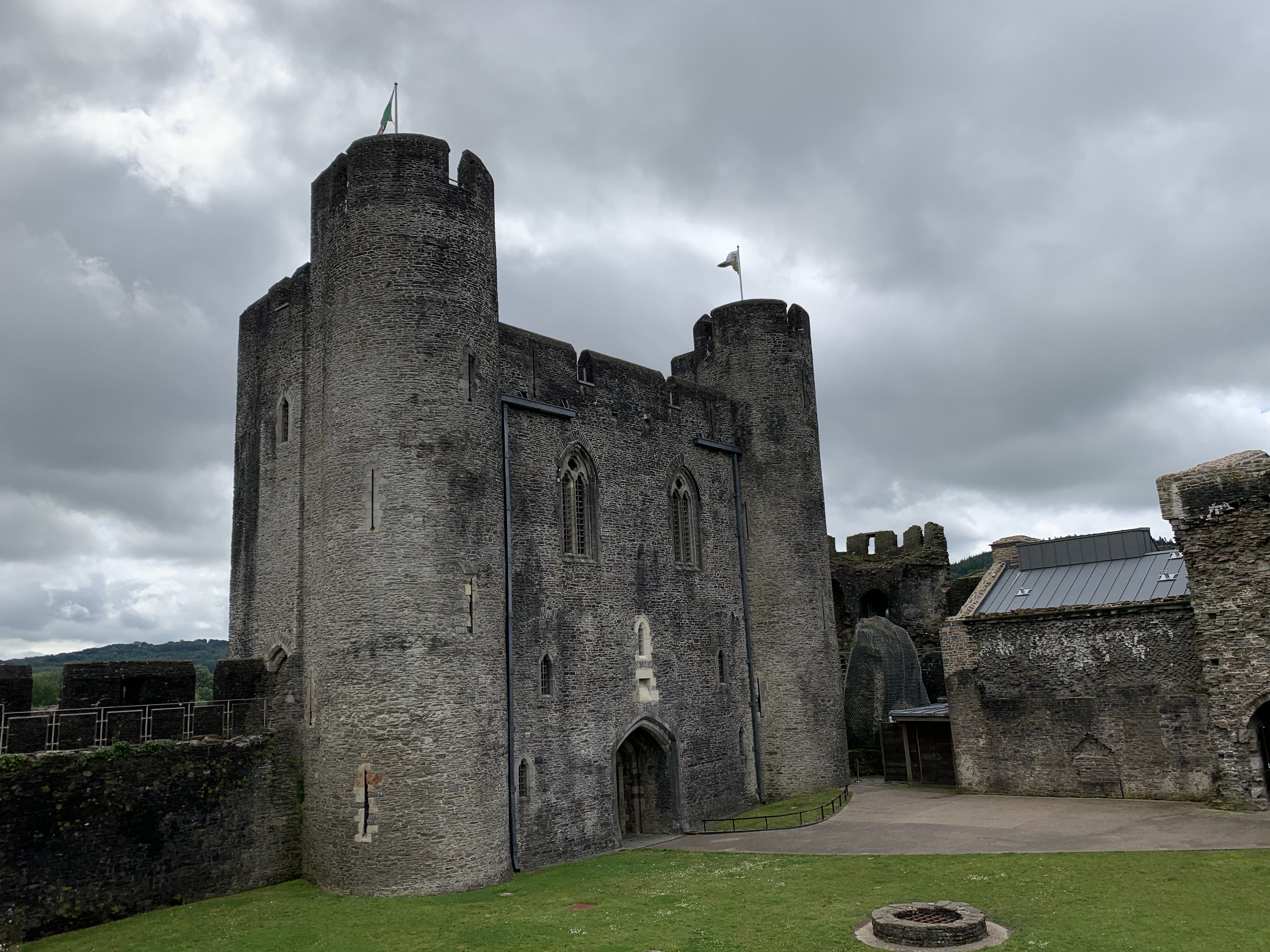
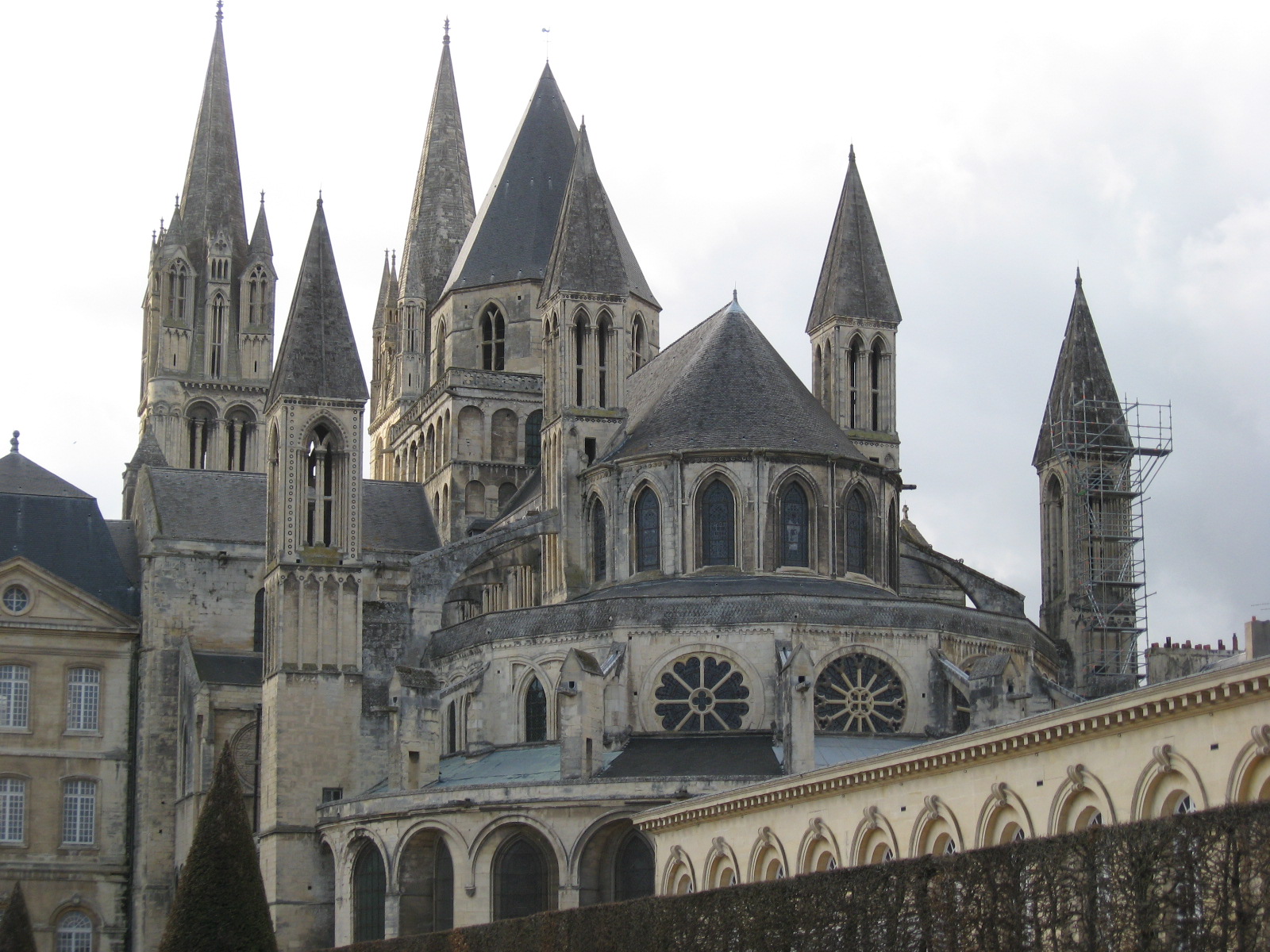
Sir Phillip Lindsey was pulling off his gloves as he walked into the main hall of the Order of the Righteous Blade’s headquarters fortress at the city of Darnby. He had returned that afternoon from a visit to the town of Herbsford, forty miles to the west, and he had not received much good news from the knight-commander in charge of the garrison there.
Upon his return to the fortress, a messenger awaiting him at the main gatehouse had placed a letter into his hands. The messenger was an officer in the service of Northport, and the letter contained an offer of alliance from Raul of Northport. Sir Phillip was mulling over the letter’s reasoning as he walked.
The echoes of his boot heels on the hallway’s floor came too slowly for his satisfaction so he increased his pace. On either side, huge granite blocks were stacked to three times his height, edges meeting perfectly to form the walls. The entire citadel reared out of the ground like some immovable colossus. And although he was too experienced in war to believe the illusion, the strength he drew from deep within the heart of the stone propelled him down the hallway, past the hanging memorials of his Order’s five hundred years of service. A battered shield from the Stand at Morlac’s Pass. The sword worn by the Order’s first Grandmaster during the Charge of the Five Hundred. A helmet retrieved from the Massacre at Heartwood Castle.
It was an honorable history, if not as long as it might have been. The Order was technically part of the church ruled by Prelate Amadei from his seat in the Seven Kingdoms, and it had been founded only after the ancient schism with the northern church. For the past one hundred years, it had functioned with a high degree of autonomy: the prelates of years past had disagreed with the “diversion” of the order’s forces to the south, whereas the previous grandmasters of the order had, to a man, been enamored by the vision of a huge new southern empire. It had not turned out quite that way, but in fairness to his predecessors, Phillip had to admit that only a seer could have known that new tribes of nomads would decide to move north just as the order decided to move south.
As he entered a smaller meeting room, the two knights whose reports he was coming to hear set aside goblets of chilled wine and rose to greet him. The late afternoon sun streamed in from the windows on the west wall—the only windows in the room—and fell across an oval table covered with several loaves of bread, a platter cheese and slices of ham, and several clay pitchers.
“What news, Hugh?” Phillip inquired briskly, while moving to the table and pouring a glass of wine. “We have had no word from the north for days now.”
Hugh, the senior of the two knights, nodded. “So I was told at the gates, and I am saddened then to report that we may have lost Neil and Walter. They were sent north with a report four days ago, and we came only when we heard nothing from you or them.”
“Damn.” Phillip sighed. “Let us pray that they are being held captive; I had hoped to raise Walter from sergeant to knight this year. So the nomads are raiding early this season?”
“Yes, although I believe that the Tiberian Eastern Army is the larger problem,” Hugh said. “If Sir Richard’s patrol is representative of the other raids, then the Eastern Army has attacked five of the villages, and we have had to double the herd guard even during the day. Shortly over two weeks ago, so-called bandits almost managed to take the fort at Herbsford—they hit when half of the garrison was out looking for them. It was no fault of the knight-commander; all of the garrison commanders are too short of men, and each patrol is becoming something of a gamble. But if we don’t patrol, the villages will lose all hope and either surrender or abandon their fields.”
During the long years of war, the order and the nomads—it really was no longer accurate to think of them as barbarians—had settled on certain informal protocols for their struggle. A village, fort, or town that surrendered immediately retained most of its wealth and freedoms. One that resisted for a few weeks or perhaps a month was forcibly evacuated, and its residents were reduced only to the clothes on their backs for the long walk to the next settlement. If either army conquered by force, or endured a long siege, the defenders risked death or enslavement because the town or village would inevitably be sacked by the victorious force.
As the order’s strength waned and its garrisons were weakened, the problem in recent years had been convincing the independent villages to resist until reinforcements could be sent.
Phillip nodded. “I accept that. I know the man who commands at Herbsford; I know his worth.” He lifted the folded parchment, Raul of Northport’s letter, which he was holding in his hand. “Raul of Northport is convinced that the Eastern Army is about to strike south. He has invoked the Free Cities’ mutual defense treaty, and he offers a full alliance with their combined army for the coming news.”
“Outstanding!” Hugh exclaimed. “This news has some bearing upon my next request of you.”
“You are here to ask me to issue the call for a full muster, yes?”
“Yes,” Hugh answered. “I believe that the Eastern Army is coming. If the nomads come with them or merely seize the opportunity to launch a great raid at the same time, these lands are going to get ravaged. Even with the full order, we will be hard pressed to hold the fortress.”
“I will issue the call,” Phillip declared. “It is time for the Order to march again as an army.”
“To raise that many, you will need to strip all the towns and villages,” Christopher observed. He was one of the longest-serving commanders stationed in the east. “Can we afford to take that risk?”
Christopher’s question evoked an old strategic problem. With the collapse of the Empire and because of the long period of weakness among its successor kingdoms, piracy had again spread across the Southern Sea. For over two centuries, and especially during the last five decades, the Order had been fighting, and slowly losing, a war on two fronts—the nomads to the east and the Tiberian Empire from the north. But that equation finally showed a glimmer of hopeful change.
“I think so,” Phillip told the two knights. “We have had news from the southwest. And it is good news for us. By all accounts, Cardinal Giuseppe is a true reformer. He has broken dozens of corrupt clergymen from their offices in the last few months, and he appears to be systematically working his way through each of the church’s sees. And his recruiting parties are already returning with new converts from the Free Baronies and Seven Kingdoms. It will take time, but we will see more men arriving here as a result. But perhaps even more importantly than Giuseppe’s efforts, at least in the short term, is the news that Duchess Francesca has tasked one of her admirals with campaigning personally against the pirates and their allies this season. The Duchess has strengthened her navy over the last three years, and with only a small amount of luck, her admiral will occupy all of the pirates’ attention all year. Even with bad luck he should occupy enough of them that a full-scale raid will be temporarily beyond their means. We have a window in which we can focus on our northern and eastern adversaries. If we combine with Raul’s army, we can meet the Eastern Army in the field. We are running out of days when we will see this kind of opportunity, and if the Order falls, I would much rather see us go down in battle than be bled away in a thousand skirmishes and a siege lasting years.”
Hugh cracked the knuckles in both hand before he responded, but then he smiled coldly. “I agree,” he said. “Perhaps we have fought on the defensive for so long that I am turning craven. The risk is well worth it. The men need a victory, and we owe them the opportunity to have one.”
“A victory certainly will help in the short run, but we need to find the sword. Doing so will attract new men to fill the ranks,” Phillip said. “But even if we find the sword, it will not be enough unless the church recovers itself. If the cardinal fails, we must reach an accommodation with one of the seven kings.”
Centuries ago, when the vicious civil war erupted as the Old Empire broke up into two major and a host of minor kingdoms. Aderan, a general commanding the Imperial forces in the water-bound province, gathered those troops still loyal to him and occupied the strongest fortress-city on the island. He formed an order of knights and charged them with spreading and preserving peace in the new Seven Kingdoms and beyond. On his death bed, Aderan ordered that a bone fragment from his sword arm be joined with his sword hilt, and for years, the symbol had been the chief relic of the Order.
Then, over fifty years ago, the sword had disappeared from the city. Rumors of the sword’s reappearance at various times had persisted over the years, but the Order still searched for the elusive sword. Its recovery alone would be seen as a sign of the Creator’s favor and most likely would draw many more men to the Order. Its continued absence trumpeted the Order’s decline to the world and was perceived as a loss of grace.
“The situation is that bad?”
“It will be soon enough,” Phillip admitted. “We need more men and a decisive victory, or we will lose control of the new territories within five years. And each setback weakens us in the eyes of potential recruits—why should you serve a dying order when you could serve a rising baron? A successful campaign now might gain us another decade or two. And in that amount of time, anything can happen.”
“Speaking only for myself, I must say that I would rather face the risks now than watch as we are bled away one by one.” Christopher was known throughout the Order as one with a preference for direct solutions.
“I agree,” Phillip said. “So get a good night’s sleep both of you. We will start the muster tomorrow.”