Sunlight glittered across the shifting water as if each flash of light was the result of a minstrel strumming a lute. A listener with an ear for music might even have found some harmonious connection between the ocean’s music and the harsh coughing and vomiting noises coming from the man nearest to the water’s edge.
But few listeners had ears acute enough to hear much of anything above the demented cacophony filling the air around and behind him. Screams and cries from wounded and dying soldiers mixed with shrill equine equivalents to form a chorus of pain. Each battle was somehow eternally the same yet uniquely horrifying; later, the memories of this one would make silence seem like paradise.
His name was Keith, and as he struggled to regain his breath and strength, he kept his eyes averted from the wrack and ruin strewed across the beach and field. Breathing the thick stench, a mixture of blood, human and horse feces, and urine, was a preferable struggle for now; only the faint hint of a salty ocean breeze made it bearable. He would need to face the carnage soon enough.
“A tough day,” a voice rasped from behind him. The voice sounded quiet, although it must have been fairly loud to carry over the background din of moans and screams. The drum-and-fife music before battle sounded nothing like the raw shrieks after the bloodletting.
Sand compacted under Keith’s hand as he pushed himself to his feet. A surge of wind slapped against his face and drove back the smell of the field for a few seconds. Yet turning to face the carnage was one of the hardest actions he had ever taken.
The sand, and the land beyond it, was carpeted in a dense layer of bodies that stretched as far as his eye could see. The main battle lines had met almost half a mile south of this point, but his cavalry troop’s role in the pursuit had carried them through the remnants of the enemy’s left wing and around the flank of the center to this point: they had slammed into the rest of the king’s royal bodyguard here, and the fighting had been brutal. But the most terrible aspect of the sight facing him was that he saw only one other man from his squad still standing—standing, not riding, because most of his men had lost their horses sometime during the first hour of the fight.
It was hard to believe that only four months had passed since he had last crossed over this land. Then, his company had survived the frigid march along the coastal road, accompanied by the remnants of the city garrison that King Demetrius had sent to escort them to safety after treachery had opened the gates to a surprise attack. A heavy glaze of ice had coated all of the trees on the inland side of the road, highlighting even the smallest branches, a surprising number of which withstood the additional weight. Dead or weaker branches, and a scattering of larger limbs, littered the ground. But Keith’s eyes kept returning to the crystalline sculptures; they seemed, in the instant of the glance, likely to stand for eternity, even as his mind winced at this reminder of the impermanence of all things—living or dead. Ice formed. Ice melted. Trees grew. Trees died. Four facts.
Now, after this last battle, Keith felt that if he ever again saw this stretch of land, it would be far too soon and one time too many.
Keith did not know the man who was now standing beside him. “Yes,” he said. At first, one word seemed like all that he had the energy to utter. Another thought occurred to him, however, and it had to be spoken. “But every battle is worse than you expect it to be.”
After only three battles, he already knew that for certain. Even the most honest bard inevitably failed to capture the chaos and the blood in their songs and poems. You had to see it to believe it, Keith now knew.
The man was older by at least a decade or two, perhaps thirty-five or forty, with loose, long hair and no weapon. He wore a mail shirt, but the length of his hair and lack of weapon were revealing. Only someone who did not expect a hand-to-hand fight let his hair hang where an enemy might grab it. Only a mage could have survived on this field without a weapon in hand. Anyone else who had survived this field, Keith suspected, would never again be far from a weapon. He had ridden into battle with a lance, a mace, and two swords—one sheathed at his waist and one sheathed and hanging from his saddle. He had one weapon—his long sword—left, and its quality had saved him during the battle’s final encounters, when other swords were breaking or slipping from sweaty palms.
“That is right,” the mage said. “Sadly, that is right. May this one bring us a step closer to peace.”
Keith tried to laugh. The harsh croak that escaped his throat was almost unrecognizable, even to him. “One step will never get us there.”
The mage sighed and rubbed at his forehead and eyes. “Every journey must begin somewhere,” he said. “Demetrius is fighting mostly for survival, not solely for ambition. He wants peace sooner rather than later, I believe.”
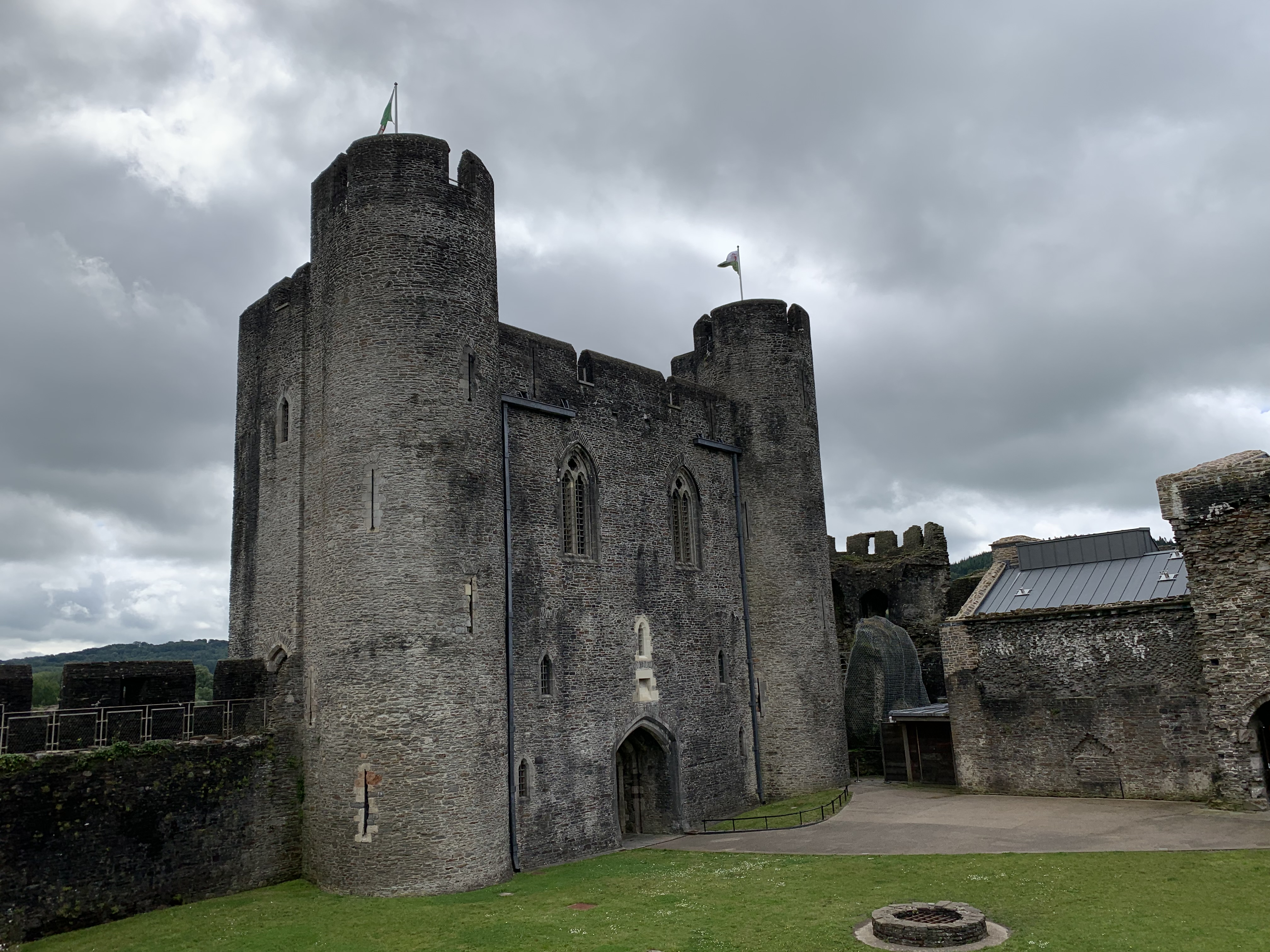
Demetrius of Raonda was one of the great captains of his time, and he had carved a substantial kingdom out of the western and northern settlements on the largest island in the Southern Sea. Once one of the richest provinces of the Tiberian Empire, the island had quickly fractured into rival kingdoms after the Old Empire’s collapse. Nearly three hundred miles from west to east and two hundred from north to south, the island had once held twelve kingdoms; now, there were seven, with Demetrius’s holdings after this victory clearly being the largest.
Nobody now living could remember a time when two or more of the kingdoms were not locked in yet another war. They fought for land, for livestock, and for grain as often as they fought for a ruler’s ambition, and they rarely lacked the necessary soldiers. The Free Cities to the east and the cities, towns, and villages of Keith’s western homeland offered a constant stream of desperately poor or recklessly adventurous, but usually poor, young men to fill the ranks of Demetrius’s army. Keith and his troop of cavalry were only one of the units raised by the elders of his clan, but they were the best in recent memory. Or had been? How many of them were left was still unclear.
The mage must have seen some hint of Keith’s thoughts on his face. “Show me your wounded comrades, sergeant,” the mage said, “and I will do what I can for them.”
Keith blinked. The offer was generous, and therefore unexpected. A dim alarm bell sounded within the exhausted fog oppressing his mind. “Why?”
The mage smiled. Fatigue gave the expression a wavering, fragile cast. “There’s a reason why you are still standing here, soldier, and why I am too. Your company was close to unstoppable today. Your charge shattered the Guard’s line. I simply rode in your wake and was able to focus more on hurting our enemies than on defending myself.”
Keith surveyed the field, trying to connect the flickering scraps of memories. Through the clouds of dust and sprays of blood, seeing anything further than five or ten feet was almost impossible once the fighting had begun in earnest. “We were doing well, but . . .” His voice trailed off and he shrugged. The explanation had silenced the bell, and the part of him that was still a soldier, always a soldier, remembered the need for trust. “What should I call you?”
The mage reached out and clasped the hand that Keith offered to him. “My name is Ranulf,” he said.
Keith nodded and shared his own name. “Okay, then.” He pointed at Ahern, one of the junior rankers in his squad, a hulking bear of a man. “That soldier is one of mine.”
Stepping forward into the sea of carnage wrapped a cold shroud around his soul, but at his core, a small fire of duty, of obligation to his men, kept Keith from completely freezing inside. Each step, though, seemed to thicken a layer of ice between him and the world around him, much like the winter ice had covered the branches of the trees.
The rest of the men, if they were still alive, should be on the field somewhere near Ahern, or behind him. Keith glanced up at the sun, gauging its position in the sky. They would have to hurry; the camp followers and lurkers from the surrounding villages would be on the field after darkness. A rich harvest of booty awaited the scavengers on this field.
In the few remaining hours of daylight, though, they at least should be able to account for the rest of his squad and some others from his company. You were never able to help everyone, he knew, but you tried—and you gathered your dead. All along this stretch of the beach, other soldiers from other companies were starting to backtrack through the carnage. They had their own bonds of loyalty and friendship to honor.
Those soldiers would take care of their own men, and Keith and his new ally would take care of his. Any larger tasks would hold until the morning.
#
During a night of cramps and aches from strained muscles and joints, Keith slept for fewer than five hours. He was exhausted, but a pressing need for food and water drove him off of the ground close to dawn, despite the silent protests from his body, which felt as if a giant had twisted it back and forth and then stomped on it a dozen times.
The laundrywomen among the camp followers had set up their stations and were scrubbing the sweat, blood, and urine from the undershirts and trousers of a steady stream of soldiers. Other men were moving stiffly around the rough encampment with buckets of ale or wine, and the quartermaster already had fires lit and food cooking. Keith nodded thoughtfully. King Demetrius might be a ruthless bastard; he had once put the entire surviving population of a conquered town to death because its leaders had killed one of his heralds. But he was a smart man: he took care of his soldiers, the source of his power.
Few of his soldiers, after all, served out of love. Most were mercenaries, originally peasant or laborers or fallen nobility, and poor enough to choose the battlefield as a good way to make a living. Keith, in his third year, was fairly typical. He signed each year to serve for ten months, in exchange for his food, three silver pennies each day (wages which were paid monthly), and the promise of a land grant if they ever succeeded in conquering this bloody region’s plains and valleys. A solid combat record has earned him promotions first to corporal and then to sergeant.
Sergeant was as far as most men without wealth or noble blood ever advanced, even in a mercenary army, but Demetrius was generous to soldiers who served him well. Many men received pouches of coin or a larger land grant for their deeds on the battlefield.
So when Ranulf showed up with several of the king’s staff officers to pull Keith away from his mess kit and the last dregs of his stew, Keith had a reasonable sense of what might be about to happen: a meeting with the King and a modest reward. He chewed and swallowed the last piece of pork as he hauled himself to his feet.
Hamstring and calf muscles flared painfully at the pace the officers set on the walk through the camp. The pain was a small punishment to endure to deny his superiors the illusion that they were somehow better than him because of blood that they had not risked shedding on the previous day.
King Demetrius’s pavilion was set up near the top of a low ridge. Hanging from a pole jammed into the earth near the tent’s entrance, the king’s banner, a black eagle on white, fluttered in the morning breeze. The king’s pavilion was surrounded by the bivouacs and cooking fires of the companies and contingents of the army. Judging from the mass of men he could see and the visible banners, Keith estimated that the army still had somewhere between eight and ten thousand men left, which should be more than enough to hold the city and to collect the ransoms for the relatively few remaining nobles left alive.
Inside, Keith was surprised at the informality of the king’s court. A handful of the king’s bodyguards stood near him, but the general commanding the guard was not hovering at the king’s side as he usually was when Demetrius moved through the camp or across a battlefield.
King Demetrius sat at the head of two rows of chairs, talking and joking with the senior officers and nobles almost as if they were his peers. And in one sense, Keith realized, they were. Unlike his escort, these men had risen through a harsher school. They varied in age from twenty to fifty, but they were united by years of battle and intrigue against the other kings and generals on the island. Ambitious and calculating, they still knew each other’s worth and had saved each other’s lives countless times. Years from now, if Demetrius succeeded in conquering the entire island, perhaps one of them would turn on him or on the others. For now, though, they all knew that they were a force to be reckoned with so long as they worked together.
They also, as veterans, respected men who performed well on the field of battle. Their conversation died to a muted murmur as Keith and Ranulf moved through the rows of chairs. Ranulf had changed back into his court garb, a black silk shirt and comfortable trousers, whereas Keith wore a plain shirt and trousers, both still damp from a washing. The entertaining anomaly of seeing a sergeant and a mage walk side by side might explain part of the interest in the two new arrivals.
King Demetrius smiled. His smile eased the lines on his forehead and lifted ten years from his face. “I guess that you know why you are here,” he said. “I believe in rewarding good service, sergeant. The men from your homeland have always numbered among the most reliable soldiers in my army, but according to Ranulf, you and your squad members went above and beyond any normal performance. He tells me that the rout of my former enemy’s royal guard started from where you hit its lines.”
Keith shrugged and bowed deeply to acknowledge the praise. “The entire company did well, King Demetrius,” he said. “But I will have to trust Ranulf’s word on the rest. We were just trying to stay alive. The guardsmen were good fighters.” Pride in his own people caused him to add a further comment. “Perhaps we were better.”
Keith’s home city of Redstone oriented itself around the fighting and winning of wars. Enemies on all sides had given them little choice—if they wanted to survive as an independent people, they had to be able to win. His people’s male children only stayed in the care of their mothers and nurses until they were nine, and then they were organized into small groups of twelve boys and went through early schooling and training together. At fourteen, they were formed into groups of one hundred and twenty and began to receive more intensive and serious military training. By eighteen, they were integrated into one of the garrison companies for two years of seasoning, and then they were transferred into one of the field companies for six years. After that, they were free to seek out service as a mercenary if they could not afford to live in the city, and their training made them desirable recruits for any good company. Fortunately, because without such rigorous training, Keith doubted that he would have survived the encounter with the royal guard; even with it, his company had lost over half of its men to death or wounds.
Far down the row of chairs on Keith’s left, a voice behind him drawled, “The masterstroke was the turning of the right flank. Once that happened, their defeat was assured. They fought hard for a doomed cause from that point.”
The voice belonged to Baronet Stefon of Ashford, one of the leaders among the noble cavalry. He was lean as a whip, a tough veteran but one who still felt he had something to prove. Keith had no intention of contradicting the man in this forum. The mage standing beside him apparently felt more secure.
“I must humbly disagree, Baronet,” Ranulf said. “Those were veteran troops. They were shifting their lines to refuse the flank and betting that they could chew up our left flank, break through it and rout our center, before we won the turning action.”
The baronet shrugged and turned part of the way away from them in his chair. It was a deliberate slight, essentially the equivalent of turning his back on them in a face-to-face conversation. Keith and Ranulf glanced at each other; their tenuous relationship had just solidified into friendship as he and the mage became bound by another link of shared experience.
King Demetrius also noticed the slight. He frowned and stood, inviting them to join him in the back section of the tent, which was separated from the front half and offered some level of privacy. At fifty, Demetrius was still strong and half a foot taller than Keith, but two of the king’s guards also accompanied them.
A private audience was considered a great honor, and the boon caused a brief outburst of murmuring behind them as they followed the king deeper into the tent.
The back section contained a handful of chairs and a small camp bed. The king settled into a chair behind a small table and motioned for them to sit. For a moment, they stared at each other.
Perhaps King Demetrius saw something on Keith’s face, despite his best effort to get it expressionless, or perhaps the king simply wanted another perspective on the question. “And you, soldier? Do you share the baronet’s belief?”
“I am not certain, your Majesty,” Keith said. “I think—think—they had checked our army’s attempt to turn their flank. But the field was a chaotic mess. I do know that we had so few men left by the end of the battle that only the smallest change in luck would have given victory to them.”
King Demtrius chopped one hand forward, shaking his head. “You are being too fair,” he said. “I could see the field well from my vantage point, and I am certain the baronet is wrong. I owe this victory to you and your company.”
Before Demetrius could speak further, the general commanding the king’s bodyguards brushed aside the hanging cloth serving as a doorway and entered the room. Stocky and gray haired, the general still moved like a runner eager to sprint at a moment’s notice.
“It is done, your Majesty,” the general said, perhaps before he noticed Keith and Ranulf standing to one side.
Demetrius’s eyes widened slightly. “Clarity, general,” he said. “What is done?”
“The executions of the prisoners, your Majesty.”
A sudden tic of rage misshaped the king’s face for a moment. “By whose order?” The question came out as a soft hiss.
To Keith’s eyes, the general looked genuinely confused. The man cleared his throat and stiffened to attention. “By yours, Majesty.”
A brief pause lingered, before King Demetrius glanced at them. The king’s face was a stiff wall, set in lines that resembled granite.
“I see,” the king said, and something in his impassive gaze wrapped ice-cold fingers around Keith’s spine. “Sergeant, Ranulf, I must ask you to leave now.” Those words were all that King Demetrius said.
Keith led the way from the tent. His heart was pounding as if he had just sprinted a mile. Witnessing the powerful while they made a mistake was always dangerous. Both men walked a distance from the tent before Ranulf ended the somber silence.
“And here I thought that we were lucky,” he muttered. His hand fell lightly on Keith’s arm. “I will try to find what that was about, but be watchful. Seeing that conversation might have put both of our lives at risk. If so, Demetrius probably will seek a subtle solution. Don’t get into any fights for a day or two.”
Keith nodded. He had childhood memories of sudden encounters with vipers while walking through peaceful forests. The feeling in the pit of his stomach evoked those memories.
Caution was called for, but how could a man step carefully in a snake pit?
#
Later that same afternoon, a new man joined Keith’s squad. He claimed to be a new recruit, and perhaps he was. But the man moved like a dancer and was larger than Ahern; unless he was a complete moron, such agility and size made him prime material for the royal guard. The sky darkled as the day unfolded, dark purple, almost black, rain clouds blocking the sun from view, and Keith became more and more convinced that he would suffer an accidental death if he remained in the camp for another day or two.
Darkness was falling and the cooking fires were beginning to burn down when Ranulf appeared. Keith’s relief was difficult to hide, but he tried to exchange casual niceties as Ranulf waved a bottle of wine and offered to share it with him. A thanksgiving offering for saving his life, he said for the listening ears. Keith scrambled to his feet and joined the mage. They left the circle around the fire and walked casually through the camp.
“It was a mistake,” Ranulf told him. “The king marked a list of prisoners with an ‘x’ to prove that he had read it, and the general interpreted the mark as the order to kill all of them.”
Keith rubbed his two hands together. Sweat lubricated his palms. “Yet the story floating around camp is that the king had them killed as a warning to the soldiers in the rest of the unconquered cities. Resist and die, or surrender and live.”
“Yes,” Ranulf said, “the king’s guards also started that rumor, and there are only three other people in the world who know—know—that it is false.”
“Holy Father,” Keith muttered.
Here and there on the fields where the army was encamped a tree still stood, and from one came the mournful hoots of an owl.
A competent king could not afford to become the butt of jokes about such an incompetent mistake. A ruthless king undoubtedly would see a simple solution to the problem of witnesses. King Demetrius had often used assassins to remove enemies during his rise to power; he even seemed to prefer such precise solutions to his problems.
Ranulf cleared his throat. “If we leave, and leave no telling rumors in our wake, he might let it go.”
“Might is a word that doesn’t comfort me,” Keith said. “Others in the camp know we met with him; they’ll start some kind of rumors on their own initiative.” He drank deeply from the bottle. “I don’t want to live the rest of my life relying on his goodwill.”
That left only one other option. They both knew it, and the idea was staggering even for two very practical men.
“He is competent,” Ranulf observed, “but not a good man.” They were far from the center of the camp and away from most of the fires. In the shadows ahead of them marched the pairs of soldiers that composed the close-in patrols. The soldiers were too far away to hear normal conversation, but Ranulf had lowered his voice anyway.
Ranulf was referring to the generally known facts of Demetrius’s behavior while on campaign. Two of the most notorious stories had to do with the king and women. “Bring me a woman,” he was rumored to say to the junior officers in his court, who would then find a woman, not always a willing prostitute, strip her and escort her to the king’s pavilion. The other, which Keith had heard from another sergeant he trusted who had witnessed it, was when Demetrius’s eye had fallen on a young countess in a group of singers. He threatened to pillage her husband’s entire estate and all of the surrounding villages unless she submitted to him. The young woman fainted and had to be carried to the king’s pavilion. Nobody witnessed what happened inside the pavilion, but they all knew within any rationale expectation. Keith was a soldier, and soldiers knew that women faired poorly in wars. Still, Demetrius brought a level of cold calculation to his pursuits that turned the stomachs of most of the men who heard about them.
Keith hesitated. No matter the rationale, they still were meditating upon a deliberate killing. “He is still a king. If we kill him, the nobility will want our heads on principle. They will want to make an example of us.”
“Yes,” Ranulf admitted. “We will need to run far and hide well afterwards. At least until they start killing each other.”
“Can we even get to him?”
“There is something I can do that will help,” Ranulf said. “I can use my power to bend their eyes around us. We can pass unseen by the guards. And as far as I know, no other mage has learned this, so perhaps they won’t automatically suspect us.”
Keith nodded. “My company’s senior sergeant used to say that you get the kind of leaders you deserve. He was right. I believe that Demetrius has already sent an assassin to my squad, so I am no longer willing to serve this man.”
“This is how history changes,” Ranulf murmured. He seemed to be speaking to himself, not to Keith. “And I cannot use this evidence to win that argument.”
Ranulf had more to lose than he did, Keith realized, and with that thought came the shiver of doubt. How could he could he know that Ranulf would not seek to kill him at the first opportunity? After all, a secret held by one is safer than a secret held by two.
They stared at each other without speaking; in the dark, both men’s eyes seemed black. Then they shrugged simultaneously. Sometimes a man simply had to trust another, and the battle bond offered a better foundation for that trust than did most other bonds.
They were both decisive men, so they acted without even risking a return to the campfire. In fact, the decision to act was harder than the act itself. Ranulf’s powers worked as promised, and they slipped slowly and silently through the cordon of guards around the king’s tent and inside the open flap.
In the secluded section at the tent’s rear, King Demetrius worked at a camp desk. Some instinct pulled Demetrius’s attention from the papers scattered across a crude camp table as they approached him, but there was nothing to see. A second later, Ranulf’s power wrapped the king in an immobilizing grasp and Keith stabbed him high in the stomach, his dagger’s blade angled upward toward the king’s heart.
Feeling the dagger drive home and seeing the brightness of life fade from the king’s eyes finally allowed the shock over what they were doing, and had done, to penetrate Keith’s stubborn detachment.
For a brief instant, his feet seemed to be rooted to the floor. But he had survived three years on campaigns, and he had not done so by freezing up when the stakes were highest.
“What a mess,” he muttered.
Ranulf let slip the concealing blanket of his power. The beads of sweat on his forehead were rolling down his cheeks, but his face was calm. “We need to clean up. I’ll be able to hold up the shield long enough to get us away from the tent and out of camp, but then we’ll be visible. If they suspect us, time will matter.”
Keith reached down and lifted Demetrius’s body. He carried it back onto the bed at the rear of the tent and threw a heavy blanket over the body and pulled a rug over the blood pool. Then he rejoined Ranulf, who had found the king’s war chest and was loading gems and gold coins into two fairly large bags.
“Running and hiding can be expensive,” Ranulf said. Embarrassment and resolution added a rasp of awkward stiffness to his tone.
Keith nodded and accepted one of the bags. “If we can get out of the camp, we should head east.”
“Why east?” Ranulf tied off his own bag and paused to hear the answer.
“There’s a village ten miles up the coast,” Keith replied. He had been a good sergeant, and good sergeants always knew how to find suppliers for anything their men might need. “I know a smuggler, a man with a boat, who lives there. He’ll get us off of the island for a payment in gold.”
Ranulf put his hand on Keith’s arm and, after a second, said, “We are shielded from sight again.”
“Let’s move,” Keith said.
Before they left the tent, Ranulf spoke one more time.
“Word of this will spread,” he said. “And killing a king is a difficult reputation to live with.”
“Keith is already dead. My name is Ahern now.”
Changing a name, he now knew, was even easier than changing history.
#
One year later and seven hundred miles away, a seagull flew over a small compound of wood and stone buildings. The buildings were tucked into one corner of a busy intersection inside the walls protecting Port Liberty. Set back less than three hundred feet from the docks, the compound’s purpose was revealed in the name on the sign hanging near the front door of the main building.
The Crazy Sailor and Parrot was a small tavern that looked well maintained and fairly prosperous, if the color and relative cleanliness of its whitewashed walls was an accurate indicator. Sailors being men with earthy senses of humor, they had christened the inn as “the Dirty Bird” in their dock slang.
When the door into the tavern opened, it let a fierce blast of the cold air outside into the packed and riotous room, and a shower of mostly good-natured curses rained upon the man who entered.
From across the room, where he had been unloading a case of rum behind the bar, Ahern looked up to check on the new arrival. The tax collectors and city watch rarely stopped by this early in the day, but one never knew.
He thought that he covered his start well enough to conceal it from the few early drinkers in the bar, but the smile that shaped Ranulf’s mouth revealed his alertness.
After Ranulf crossed to the bar, Ahern reached out and clasped his hand. “Long time,” Ahern said.
“Yes, it has been.” Ranulf sat on one of the stools, which were flat pieces of wood nailed to posts driven through the floor and deep into the hard-packed earth beneath the building.
“You’ve heard about what’s been happening on the island since we left,” Ahern said. It was not precisely a question. Tales of the brutal civil war in Raonda had filled the taverns for months now.
“Yes,” Ranulf said. “Dangerous times there. But then it will happen here, too, eventually.”
Ahern shrugged. “That will disappoint my peers,” he said. “Civil wars are bad for business.”
After holding up the mug of ale that Ahern had given him, Ranulf muttered: “May it be years from now then.”
They listened to the lute playing of the traveling bard whom Ahern had hired for the month. The man was a good player and wise enough to stick to the light, jumpy tunes on a day with such terrible weather.
“You are doing well here,” Ranulf said.
Ahern shrugged. “Well enough. Making money is easier when you already have it. And making it this way is certainly safer than making it the way I used to.”
The old way—living off of a soldier’s wages and plunder—occasionally worked, too, at least for those who were lucky enough to survive. But he knew, better than most people, the risks of the game of war and kingdoms. On the field of battle and off of it, nobody truly controlled his or her own destiny. Nobody truly controlled how events unfolded.
Some men might dread the relentless stream of the boring days of ordinary life; some might miss the brief interludes of heart-pounding excitement and anxiety.
Ahern, though, thought he might live out the rest of his days content with the knowledge that he and Ranulf had played their small role in the making of history. He truly thought so.