Wow, do the scholars in this area like to argue with each other, or what?
A lot of the available sources disagree with each other about specific numbers. For my usage and purposes, sometimes I had to decide whose numbers to accept. Then, I encountered a lot of unit-conversion issues across cultures and commodities; in some cases, I believe I spotted calculation errors in some sources (and I’m sure that I’m making some of my own, too, as I try to operationalize their numbers into my fiction and game design). My main goals were to find practical, defensible numbers so that I could understand the supply requirements of an army, the profit potential of a merchant caravan, and the cargo capacity of ships.
Here are some numbers, with some good sources named, in case you want to replicate the research. (Many of these sources had way more interesting information in them than I summarize in this posting.)
Normal Carrying Capacity
Soldier’s Load*=30-60 lbs. for long marches; 60-120 lbs. for short moves or in special circumstances; figure about 33% to 50% of a person’s weight as a typical range; enough for weapons and armor and 3 days of rations and supporting equipment (blanket, shovel, and so on). But in medieval armies, often the extra equipment and the rations would be in the horse’s saddle bags, the wagon, or the pack train, while the man-at-arms, archer, or knight dealt with the weight of weapons and armor.
Donkey=160 pounds (Bell, 124); 75 to 100 kgs (Haldon)**; I went with 160 lbs., assuming that the pack saddle counted in the potential additional margin.
Mule=~210 pounds of cargo; 230 pounds, including the weight of the pack saddle; ~96 to 100 kgs, not including the saddle (Haldon).
Horse=~200-220 lbs. of cargo; about 96 kgs (Animals typically could pull about 10% of its weight; horses, about 15-20% (Weller).
Camel (one hump, dromedary/Arabian)=~300 lbs. of cargo, excluding cargo saddle; about 150 kgs, or 330 lbs. total, for long trips; typically needed to rest for four to six months per year to stay healthy. (https://a-z-animals.com/blog/how-much-weight-can-a-camel-carry/) . Both types of camels can store water internally. Camels eat vegetation, so they’re easier than horses to maintain on long trips.
Camel (two humps, Bactrian)=~440-530 lbs., or 200-240 kgs. (males), 330-440 lbs., or 150-200 kgs. (females); up to 40% of body weight. Move at 4-6 km per hour (summer) or 8-10 km per hour (winter). Can maintain 30 to 40 km daily for several weeks; 80 to 100 km per day; and males sometimes can travel 120 kms in one day, if “they have a whole day to rest afterwards” (https://www.fao.org/4/x1700t/x1700t05.htm).
Cart or wagon (4 wheels; 2 horses or 2 oxen)=1 metric ton of cargo=1,000 kilograms=~2,204 lbs.; the long ton (2,240 lbs, or 20 long hundredweightsx8 stone (14lbs)) is a reasonable number, too. A two-wheel cart would carry about half a load (~1,120 lbs.) The English transported large shipments of wine in barrels called tuns, which could hold 2,240 lbs. of wine, or about 240 to 252 gallons plus the 8-10% weight of the empty cask (Lane, 218). So 1 tun per wagon or 100 tons of cargo in a 100-ton ship (i.e., deadweight tonnage) makes sense, but in records, the ship might be described as a 100-tun ship even though it could carry fewer tuns than that. Remember that cargo weight includes the weight of the crew, ship supplies such as spare oars or sails, the crew’s food and drink, and its weapons and armor.***
Horse transport ship (regular)=20 horses (in stalls with carrying slings); plus crew, troopers, grooms, and grain; for 10- and 20-trooper cavalry units**** [I know that grooms traveled with the horses, with one groom for four horses being a common standard; for regular horse units, I’m guessing that the riders also did, too, but I haven’t verified the presence of the cavalry troopers yet—they could theoretically be traveling in a separate round ship.]
Horse transport ship (large)=30 horses (in stalls with carrying slings). Some sources mention larger ships that could carry up to 100 horses. But the normal range would be 20 or 30 horses.
River Boats=1 to ~20 tons (keelboats); 50 to 90 tons on some specially fitted cogs and trows (https://www.cleanriverstrust.co.uk/ships-and-movement/).
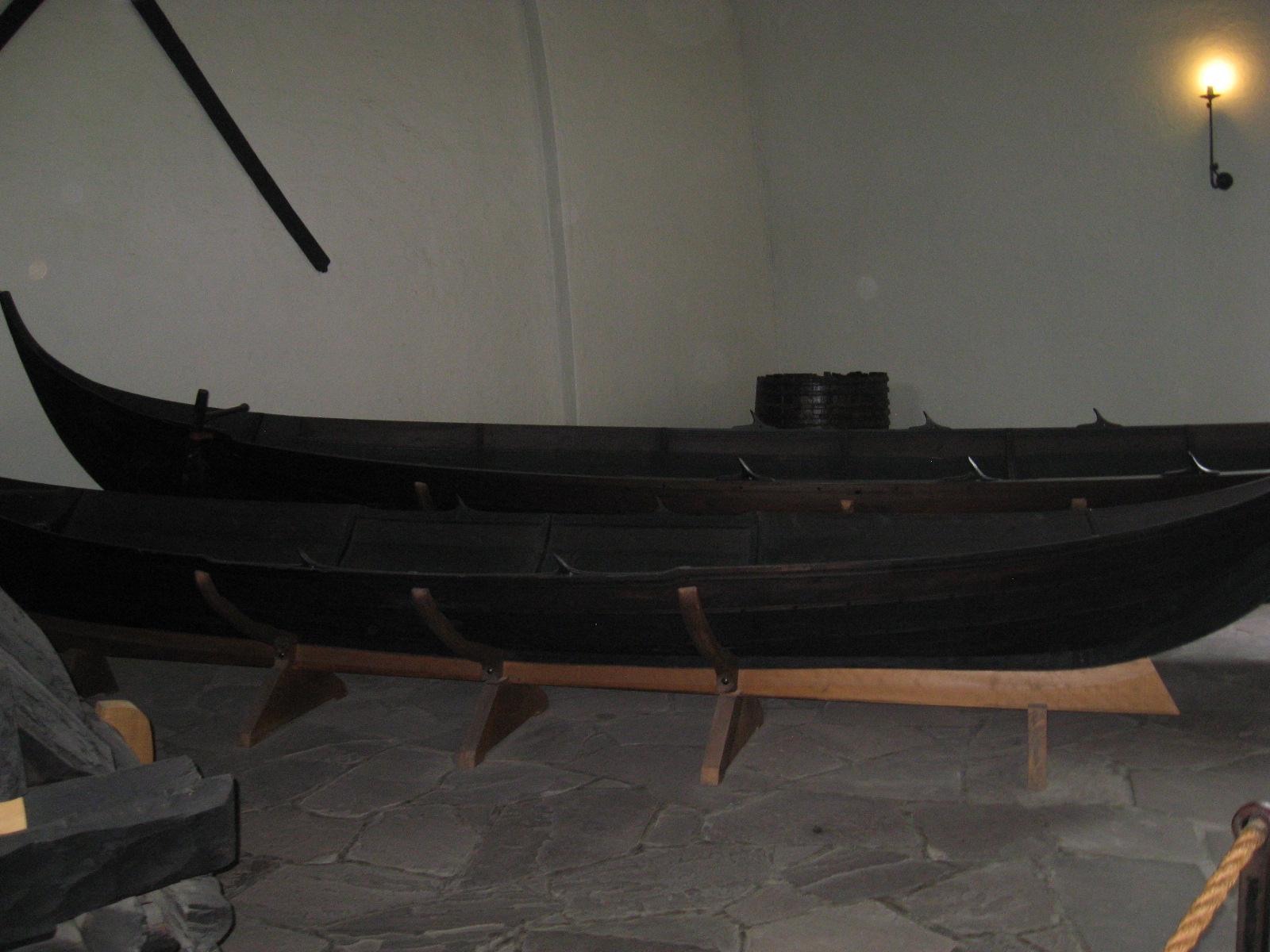
Small Cargo Ships=10 to 100 metric tons (cogs, knarrs). Venetian tarette=100 tons (Lane, Venice: A Maritime Republic).
Round Ships=200 deadweight tons (standard size) up to 1,000 deadweight tons. The largest round ships were relatively rare and often concentrated in the fleets of particular cities (e.g., Genoa had 12 rated at 1,000 tons in the fourteenth century).*****
Galleys (war, light)=~10 tons left for cargo, after crew, gear and provisions deducted (Bell); typically less than or maxed at 50 metric tons (Lane, 230). Crew=~150 oarsmen and 30 to 58 other crew (see below).
Great Galleys=140 metric tons up to 280 metric tons (~240 below deck) (Lane, 231). Crew=~150-180 oarsmen and 30 to 58 other officers, men-at-arms, crossbowmen, and passengers (often armed, too).
Practical Impacts of Carrying Capacity
One fighting soldier typically could not carry more than about 3 days of rations. One pack animal typically could carry about 7 days of rations for eight to ten soldiers. One wagon, which had to carry oats or cereals for its own horses as well as tents and other gear, typically could carry around 7 to 14 days of rations for about 20 to 30 soldiers. [My best estimates so far—lots of backend calculations.]
So if a commander wants to campaign with an army of 10,000 soldiers, a wagon train of about 400 wagons/carts and/or ~630 pack animals (ideally), or some combination of that number, is necessary. On a road, the train would stretch for about 4 miles, which is a contributing reason toward why a medieval army typically covered only ~5 to 15 miles per day. The army also would need to stay within about 100-120 miles of a base of supply (depot, port, coastline with a beach, castle overlooking a river, and so on), or its soldiers might need to eat its animals or face slow starvation.
* Typically, a medieval soldier would be carrying weapons and wearing some amount of armor. A combat sword might weigh about 2.5 to 3 pounds (other weapons were heavier), while armor could range from ~30 to 60 pounds. So the soldier’s pack with other gear and personal items as well as three days of rations ideally would be in wagons or on mules or sumpter houses.
** See John Haldon’s “Roads and Communications in the Byzantine Empire: Wagons, Horses, and Supplies,” in Logistics of Warfare in the Age of the Crusades.
*** Amidst a long debate, Judith A. Weller’s article “Roman Traction Systems” contains the calculations I’m siding with. Remember that the weight of the wagon and driver(s) comes along for the ride, too. For small carts or journeys through steep hills or mountains, perhaps 500 kg., half of a normal load, would be more realistic or sensible. With extra teams linked in tandem, much heavier weights were movable. But this load would be standard for trading, market trips, army wagon trains, and so on. The harness problem for oxen versus horses is not the only variable in play, so I would not assume that increasing these numbers to 2 or 3 tons is easily doable. Frederic C. Lane’s article “Tonnages, Medieval and Modern” is useful regarding the units of weight. Here is a key sentence: “For ordinary wooden sailing vessels the deadweight tonnage was about half the displacement loaded, that is, the weight of the cargo and the weight of the ship itself were about equal” (215). Deadweight tonnage is the weight the ship can carry and remain seaworthy.
**** Patterned after the Byzantine horse transports. See Bernard S. Bachrach’s article “On the Origins of William the Conqueror’s Horse Transports.”
***** Medieval sailing ships averaging 3-4 knots (3.5=~4mph) could travel ~96 miles in 24 continuous hours. If averaging 4-5 knots, they could cover about 115 miles per day. (See Gillian Hutchinson, Medieval Ships and Shipping.) But wind is variable, so a sustained pace of about 1.5-2.5 knots per hour is a more realistic speed to estimate the duration of most journeys. The small ships and, in particular, the war/light galleys needed to return to shore frequently (often every day or every other day) to replenish food and water or wine. Ship masters would plan routes accordingly, and at a practical level, a voyage of, say, 1,600-1,800 miles might take anywhere from 30 to 50 days. The ship master would try to push the pace to reduce the number of days in which the crew and passengers literally ate potential profits. In a similar manner, armies typically would detail officers and small groups of soldiers to find or purchase provisions every day, but long marches at 5-10 (15 rarely) miles per day would take a lot of a campaign season.
Note: River and sea transportation were much cheaper than land transportation. In Mallett’s book The Florentine Galleys in the Fifteenth Century, he observed that moving a bushel from Pisa to Signa (a Florence suburb, basically) by water cost ~2d per bushel, while moving a bushel by land from Signa to Florence’s center (a much shorter distance) cost 6d (16).
Other Valuable Sources
Gregory D. Bell, Logistics of the First Crusade: Acquiring Supplies Amid Chaos
Donald W. Engels, Alexander the Great and the Logistics of the Macedonian Army



Leave a Reply